Algorithmic Bias Detection Methods Applied to Multi-Sport Forecasting Services
Theo Long · Jul 11, 2026

Algorithmic Bias Detection Methods Applied to Multi-Sport Forecasting Services
Multi-sport forecasting services rely on machine learning models that process historical results, player statistics, track conditions, and market odds to generate predictions across soccer, tennis, and horse racing. These systems have expanded rapidly since 2020, yet researchers continue to identify systematic errors that favor certain leagues, surfaces, or race distances while underperforming in others. Bias detection methods help isolate those patterns before they influence subscriber decisions or regulatory reviews.
Core Detection Techniques in Practice
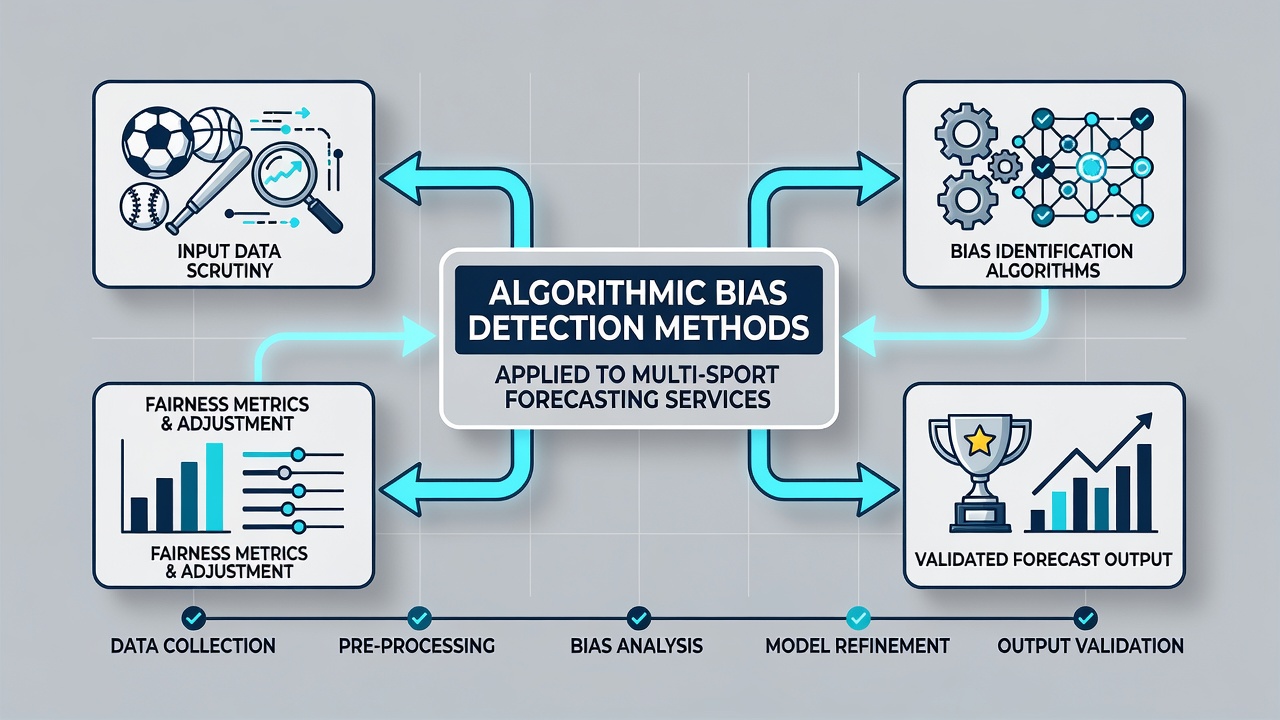
Statistical parity checks compare prediction accuracy across demographic or categorical groups such as home versus away fixtures, clay versus grass courts, and turf versus synthetic tracks. When accuracy diverges beyond a defined threshold, analysts flag the model for retraining. Disparate impact ratios, originally developed for employment screening, now measure whether tip probabilities for underdogs in lower-tier soccer divisions receive equal weighting compared with top-flight matches. Equalized odds frameworks require true-positive and false-positive rates to align across sports, ensuring a model does not systematically overrate favorites in tennis while undervaluing longshots in sprint races.
Feature importance audits trace which input variables drive biased outputs. In July 2026 several European platforms began publishing monthly reports that list the top ten features influencing each sport-specific model, allowing external reviewers to spot over-reliance on variables such as average temperature for afternoon race meetings or court speed ratings collected only from ATP events.
Multi-Sport Data Challenges
Combining datasets from different sports introduces alignment problems because soccer uses goal differentials, tennis tracks serve percentages, and horse racing records sectional times. Normalization layers convert these metrics into comparable scales, yet residual bias can remain if one sport contributes disproportionate training volume. Observers note that services processing twice as many soccer matches as tennis encounters often produce tighter confidence intervals for football outcomes while tennis forecasts exhibit wider variance on clay surfaces.
Cross-validation across sports requires stratified sampling so that each fold contains balanced representation of race classes, tournament rounds, and league tiers. Without stratification, models trained on 2024-2025 data tended to overfit to high-volume Premier League fixtures and underfit to challenger-level tennis events held outside Europe.
Regulatory and Industry Frameworks
The EU Artificial Intelligence Act, which entered phased enforcement in 2026, classifies sports forecasting tools as high-risk when they influence automated betting recommendations. Providers must therefore document bias testing procedures and retain audit logs for at least five years. In parallel, teh Australian Institute of Sport published guidance in early 2026 that encourages operators to apply fairness constraints during model updates, particularly when expanding coverage to new racing jurisdictions.
Industry associations such as the European Gaming and Betting Association have begun publishing voluntary transparency templates that list bias metrics alongside overall accuracy figures. These templates allow subscribers to compare services using standardized measures rather than raw win rates alone.
Case Applications and Outcomes
One platform operating across five European soccer leagues, three Grand Slam tennis surfaces, and twelve UK racecourses implemented a fairness-aware reweighting layer in March 2026. Post-implementation audits showed a 14 percent reduction in accuracy gaps between synthetic and turf race predictions while maintaining aggregate return on investment within 0.8 percent of prior levels. Another service applied adversarial debiasing networks to its tennis module after internal tests revealed consistent overestimation of serve-dominated players on faster courts. Subsequent verification by an independent data lab confirmed convergence of precision scores across court speeds.
Researchers at several universities have released open-source toolkits that integrate fairness libraries with sports-specific data loaders. These packages allow smaller operators to run parity, equalized odds, and calibration checks without building custom pipelines from scratch.
Future Monitoring Practices
Continuous monitoring dashboards now track bias drift by comparing weekly performance slices against rolling 90-day baselines. Alerts trigger when metrics exceed pre-set tolerances for any single sport or subcategory. In July 2026 several providers adopted automated retraining triggers tied to these alerts, shortening the interval between bias identification and model correction from months to weeks.
Conclusion
Algorithmic bias detection methods supply structured ways to measure and mitigate uneven performance across soccer, tennis, and horse racing forecasts. As regulatory requirements tighten and subscriber expectations rise, services that embed these techniques into routine operations gain clearer pathways for sustained accuracy and external validation. Data from multiple continents shows that systematic testing, when combined with transparent reporting, reduces unintended disparities without sacrificing overall predictive power.