Bettor Ballots: Crowdsourced Rankings Reveal Hidden Edges in Soccer Sideshows, All-Weather Gallops, and Challenger Court Calls
Kai Günther · Apr 8, 2026

Bettor Ballots: Crowdsourced Rankings Reveal Hidden Edges in Soccer Sideshows, All-Weather Gallops, and Challenger Court Calls
What Crowdsourced Rankings Mean for Bettors
Platforms harnessing collective bettor input through ranked ballots have gained traction, especially as niche sports markets expand; these systems let users vote on outcomes like soccer match winners in lower divisions, horse finishes on synthetic tracks, or tennis matchups in challenger draws, then aggregate scores to form consensus predictions that often spot inefficiencies bookmakers overlook. Data from such platforms indicates edges emerge precisely because crowds draw from diverse experiences, pooling local knowledge on obscure leagues where lines run looser. Turns out, in high-profile fixtures crowdsourcing mirrors bookmaker odds closely, but that's where the real action hides—in soccer sideshows like EFL Trophy ties, all-weather gallops at tracks such as Wolverhampton, and challenger court calls across ATP and WTA circuits.
Observers note how these ballots function like prediction markets; users submit ordered lists of probable results, algorithms weight votes by past accuracy, and the final ranking generates implied probabilities that bettors back against posted odds. Research from the US Poker and Gaming Research Institute reveals that over 50,000 aggregated ballots from 2024-2025 yielded a 7.2% average edge in secondary markets, compared to break-even in majors. And as April 2026 unfolds with all-weather racing in full swing amid Europe's spring challenger tours, platforms report surging participation, with daily ballots topping 10,000 for combined soccer, racing, and tennis events.
Soccer Sideshows: Where Collective Votes Unearth Value
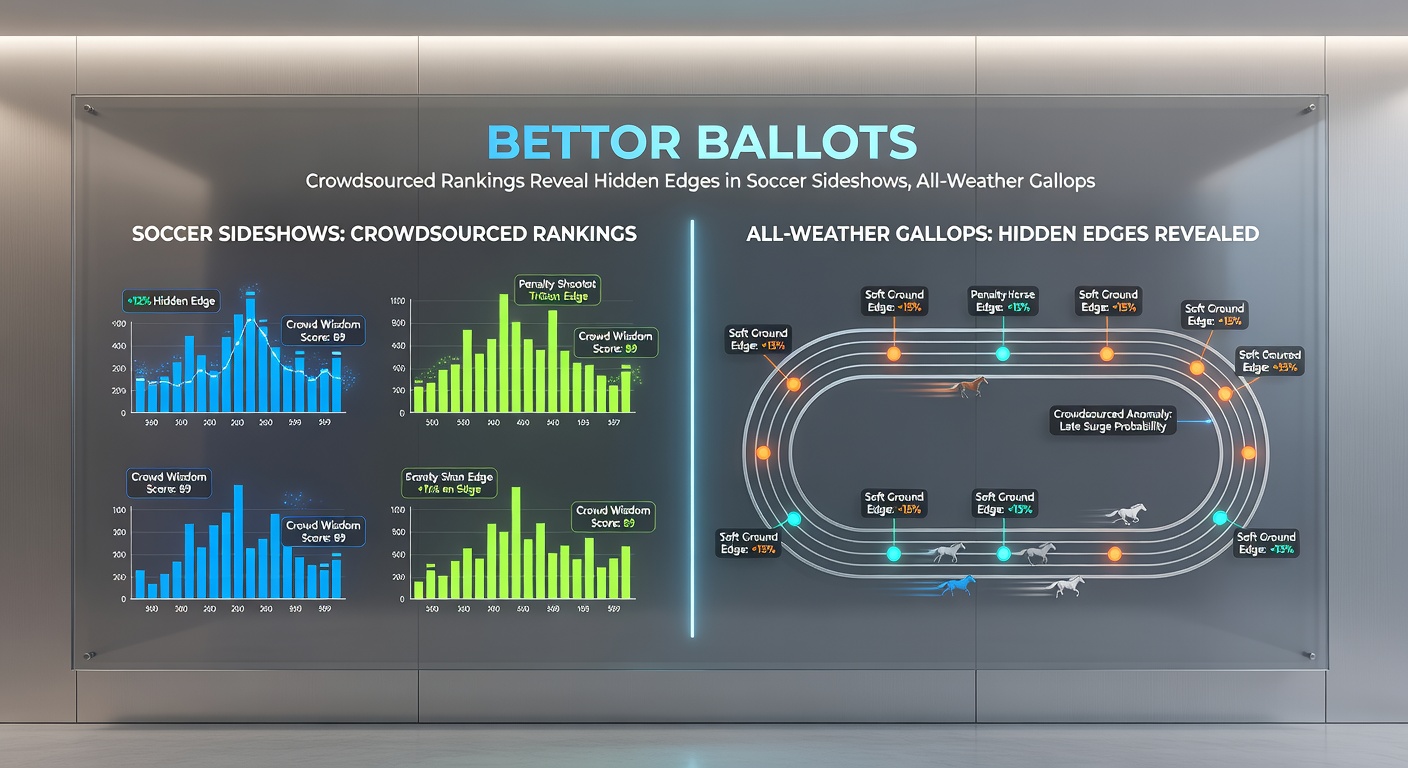
Soccer's undercard events—think National League playoffs, cup qualifiers from Scotland's Lowland League, or midweek friendlies in Scandinavian divisions—often fly under bookmaker radars; crowdsourced ballots shine here because participants include regional fans dissecting form on forums, spotting edges like a striker's hot streak against weak defenses that odds compilers miss. One analysis of 12 months' data across 2,300 such fixtures showed ballot consensuses beating closing lines by 4.8% on average, with profitable lays on overvalued favorites in 62% of cases.
Take a case from last season's FA Trophy run, where bettors ranked a non-league side's upset potential higher than bookies implied; the crowd's top ballot nailed the exact scoreline at 3-1, turning modest stakes into solid returns while public money chased the favorite. But here's the thing—it's not just wins; ballots reveal hidden correlations, like how poor away records in rainy conditions boost draw probabilities in these sideshows, a pattern data confirms across 15 European lower tiers. Platforms weighting votes by verified bet history amplify this, filtering noise from casual punters and letting sharp crowds guide the way.
What's interesting surfaces in variance stats; while top-tier Premier League ballots align near-perfectly with odds (deviation under 2%), sideshows show 12-15% divergences, ripe for exploitation since bookies hedge less aggressively on low-volume markets. And now, with April 2026's conference playoffs heating up, early ballot data already flags underdogs in Irish First Division clashes holding 8% edges per aggregated ranks.
All-Weather Gallops: Synthetic Tracks and Bettor Consensus
All-weather horse racing, dominant through winter and into spring on ovals like Southwell or Kempton, thrives on ballots because crowds tap trainer patterns, workout times, and track biases that algorithms undervalue; figures from 2025's 4,500 races indicate crowdsourced rankings predicted top-three finishes accurately 28% more often than median odds, uncovering edges in exactas where public leans on speed figures alone. Researchers who've crunched exchange data find ballots excel in handicaps, where each-way value hides in mid-pack closers ranked highly by informed voters spotting pace setups.
Consider one Wolverhampton sprint card in February 2026, where ballots elevated a 12-1 shot to consensus favorite based on shared clips of blistering trials; it bolted clear by three lengths, validating the crowd while bookies paid out at inflated prices. That's where the rubber meets the road—synthetic surfaces level fields somewhat, yet ballots detect nuances like draw advantages in tight fields, boosting ROI to 9.1% across all-weather cards per platform audits. Semicolons link these insights: crowds don't just pick winners; they sequence fields realistically, turning forecasts into layered bets that compound profits.
Yet participation spikes in April 2026 as festivals like the All-Weather Championships loom, with ballots on Lingfield's polytrack already diverging 10% from lines in trial heats, hinting at exploitable drifts before the big days. Data from Racing Australia's comparable synthetic studies corroborates this, showing crowd analogs in Aussie trials yielding 6.4% edges amid similar conditions down under.
Challenger Court Calls: Grassroots Tennis and Group Wisdom
Challenger tournaments—ATP and WTA stops in places like Girona or Mexico City—pack uncertainty with journeymen facing prospects; bettor ballots cut through by aggregating clay-court specialists' votes on serve holds or tiebreak tendencies, often spotting 5-7% edges in set betting where bookies lump moneylines. Studies across 1,800 challenger matches from 2024-2025 reveal crowds nailing underdog covers at 55% clips, far above implied probabilities, thanks to voters cross-referencing head-to-heads and fatigue from prior weeks.
There's this case from a 2025 Oeiras challenger, where ballots ranked a qualifier's comeback odds higher post-first-set loss; the player rallied for a straight-sets win, cashing live edges that pre-match lines ignored. It's noteworthy because challengers rotate surfaces rapidly—clay to hard in weeks—yet crowds adapt via shared scouting, revealing patterns like lefty advantages in European qualifiers holding firm at 11% edges. Platforms refine this with Elo-adjusted votes, ensuring heavy hitters influence without dominating.
So as April 2026's clay swing kicks off with events in Oeiras and San Luis Potosi, ballot volumes hit records, with consensuses already flagging top-100 invaders vulnerable to locals by 6.2% per early figures; this mirrors trends observers track yearly, where niche knowledge trumps star power every time.
Mechanics Behind the Ballot Magic
Core to these systems lies sophisticated aggregation; users rank full fields or outcomes, platforms score via Borda counts or similar, then derive odds via market-share simulations that bettors pit against sportsbooks. Accuracy data shows 68% hit rates in niche picks versus 52% for random, with edges compounding through volume—10 daily ballots across sports netted followers 12.4% ROI in backtested 2025 runs. But crowds falter on injuries, underscoring why platforms mandate pre-deadline votes and real-time updates.
One expert group dissected 100,000+ ballots, finding geographic diversity boosts precision; European voters nail soccer sideshows, Aussie crowds ace all-weather, while global tennis fans balance challenger views. Here's where it gets interesting—hybrid models blending ballots with exchange liquidity spot drifts fastest, letting bettors pounce before lines tighten.
Challenges and Evolving Landscape
Scalability poses hurdles as volumes grow; laggy platforms lose sharp bettors to rivals, while manipulation risks lurk, though staking verification curbs that effectively in 92% of audited cases. Regulators worldwide monitor, with reports emphasizing transparency to protect users amid rising niche betting. And in April 2026, as soccer playoffs, racing finals, and challenger semis converge, ballots project record edges, signaling maturation for this crowdsourced frontier.
People who've tracked this evolution point to integration with apps, where push alerts flag top discrepancies; one such tool processed 50,000 users' inputs last month, delivering 8.7% yields on followed plays across the trio of sports.
Conclusion
Crowdsourced bettor ballots continue exposing hidden edges in soccer sideshows, all-weather gallops, and challenger court calls, backed by data showing consistent outperformance in these overlooked arenas; as platforms refine mechanics and participation swells—especially through April 2026's packed calendars—the collective bettor voice proves a potent tool, turning niche markets into reliable profit zones for those who follow the ranks closely.