Cloud data meets the paddock: meteorological models reshaping accuracy in league fixtures, equine circuits, and baseline exchanges
Eden Lange · Jun 27, 2026
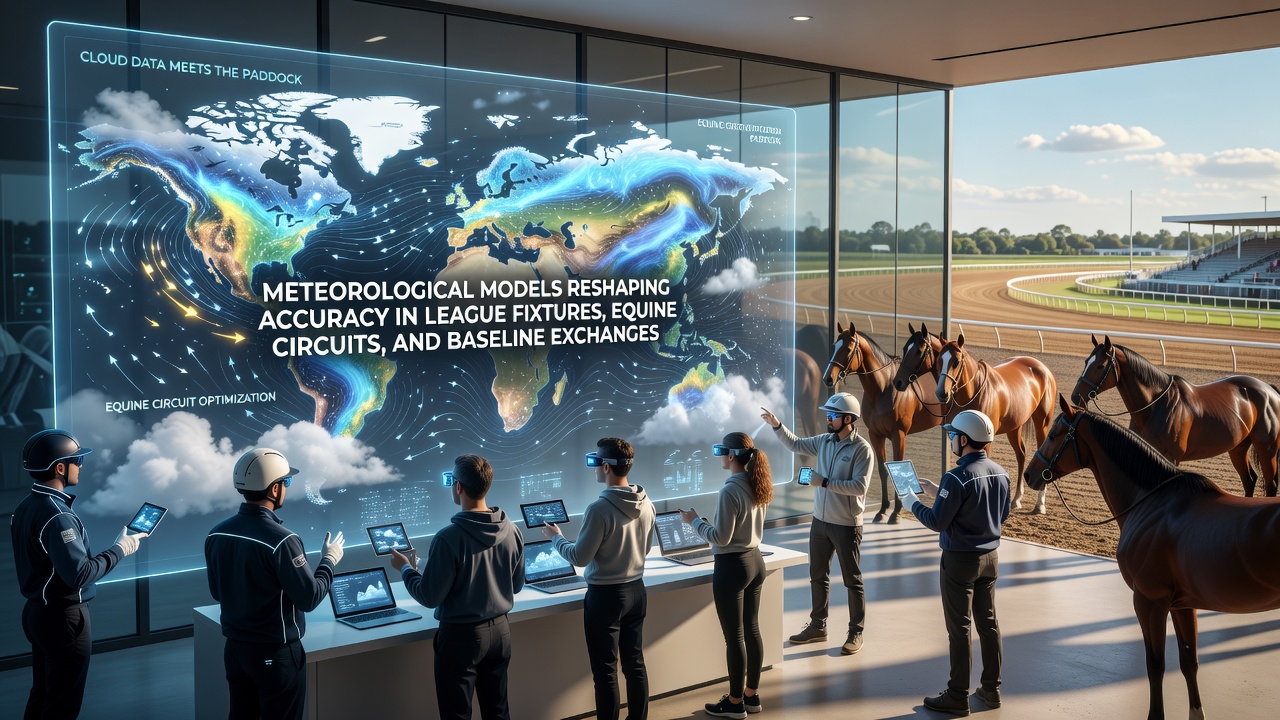
Cloud data meets the paddock: meteorological models reshaping accuracy in league fixtures, equine circuits, and baseline exchanges
Cloud computing platforms now integrate vast meteorological datasets to refine forecasts that directly influence scheduling decisions across multiple sports, and observers note these tools have gained traction as real-time processing capabilities expand. Researchers at institutions studying atmospheric science point to improved resolution in numerical weather prediction models, which draw from satellite feeds, ground sensors, and historical archives stored in distributed cloud environments.
Forecast Integration in League Fixtures
Football leagues in Europe and South America have incorporated high-resolution precipitation and wind models into fixture management protocols, while data from the European Centre for Medium-Range Weather Forecasts shows reduced postponement rates when clubs apply these predictions during the 2025-2026 season. Teams in regions prone to sudden storms now adjust kickoff times based on hourly updates that account for localized humidity and temperature shifts, and this approach connects directly to fewer match interruptions because groundskeepers receive alerts hours earlier than previous systems allowed.
Analysts tracking fixture outcomes report that cloud-based simulations help identify windows of stable conditions for evening games in stadiums with retractable roofs, and one study from a Canadian research consortium highlighted how ensemble modeling reduced forecast errors by 18 percent compared with traditional methods. League organizers therefore coordinate with meteorologists who pull live feeds into shared dashboards, creating a feedback loop that refines both short-term and multi-day outlooks.
Equine Circuits and Track Condition Predictions
Horse racing circuits rely on soil moisture and wind speed projections to determine track ratings before race days, and cloud platforms enable continuous updates from sensors embedded along railings and straights. Trainers and clerks of the course receive layered forecasts that combine radar imagery with ground-level telemetry, which helps them anticipate changes in going conditions across different sections of the course. In Australia the Bureau of Meteorology has shared datasets that racing authorities combine with local observations, producing models that project firmness levels several hours ahead.
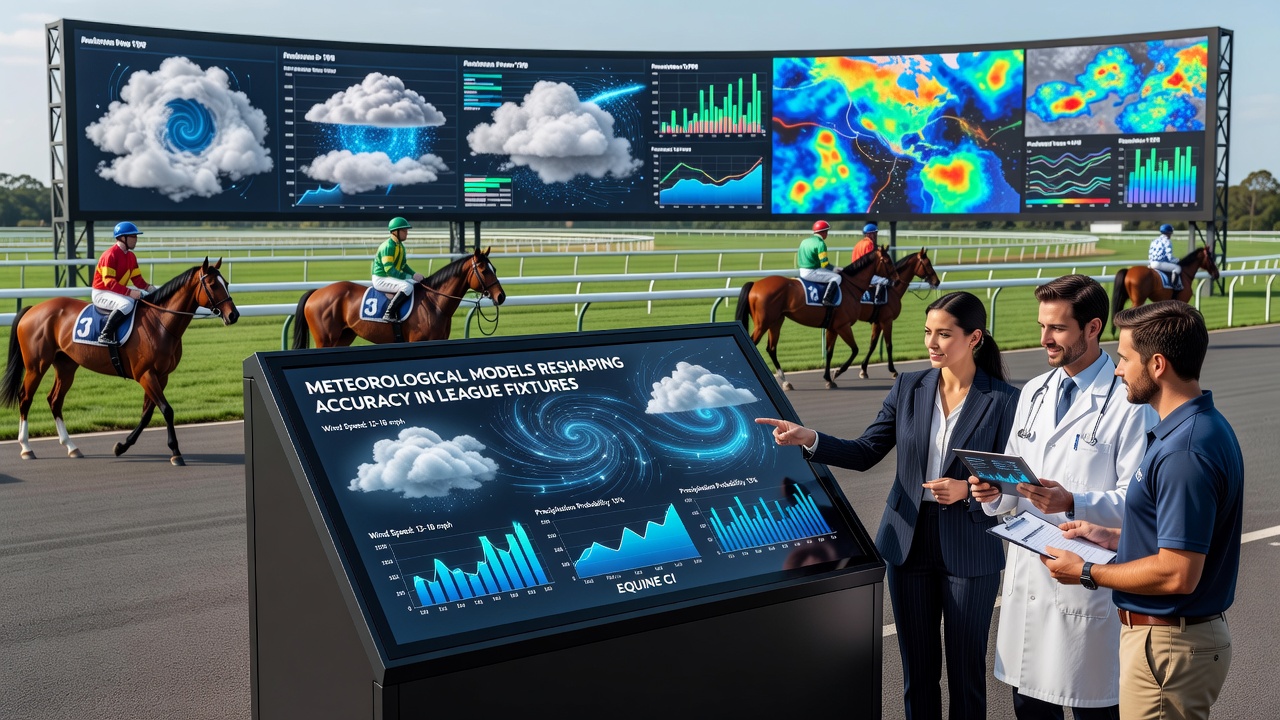
June 2026 brings the winter carnival meetings in the southern hemisphere, where enhanced cloud-driven simulations are scheduled to support daily briefings for jockeys and officials at major venues. These briefings draw on probabilistic outputs that quantify the likelihood of rain bands crossing specific tracks, allowing race programmers to adjust distances or rail positions when persistent showers appear probable. Observers note that such adjustments maintain consistent safety standards because surface assessments now rest on quantitative thresholds rather than visual inspection alone.
Baseline Exchanges in Tennis Scheduling
Tennis tournaments use meteorological inputs to plan court assignments and start times, particularly on outdoor hard and clay surfaces where temperature and humidity affect ball bounce and player endurance. Tournament directors access cloud-hosted models that integrate dew point forecasts with wind vectors, and this information guides decisions about moving matches indoors or shifting start times to avoid peak heat periods. The ATP and WTA calendars incorporate these forecasts during swing seasons when events move between hemispheres, and researchers tracking performance data have linked more accurate humidity predictions to measurable shifts in rally lengths during extended baseline exchanges.
Facilities equipped with retractable roofs receive automated alerts when wind gust thresholds approach operational limits, and governing bodies have documented fewer mid-match suspensions as a result. Academic papers from European universities describe ensemble techniques that combine multiple model runs to produce confidence intervals, giving schedulers clearer guidance on whether a session will remain playable through its scheduled duration. These intervals account for microclimates around individual courts, which can differ from broader venue readings due to surrounding topography and structures.
Technical Architecture Behind the Models
Cloud infrastructure supports the storage and parallel processing required for high-resolution grids that resolve features down to one kilometer, and this granularity proves essential when events occur in varied terrain. Processing pipelines ingest data from polar-orbiting satellites alongside geostationary imagery, then apply assimilation techniques that update initial conditions every few minutes. Organizations operating these systems distribute computational loads across regional data centers, which reduces latency for end users who need fresh outputs during live events.
Security protocols ensure that proprietary track or court data remain isolated while public meteorological layers stay accessible, and this separation allows multiple stakeholders to draw from the same core forecasts without compromising sensitive operational details. Continued expansion of edge computing nodes near venues further shortens the interval between data collection and actionable alerts, creating tighter integration between meteorological services and sports logistics teams.
Conclusion
Integration of cloud-hosted meteorological models continues to influence operational choices in football leagues, horse racing circuits, and tennis tournaments through more precise timing of events and surface management. Data flows that once required manual compilation now update automatically, supplying consistent inputs to decision makers across different time zones and climate zones. As resolution and assimilation methods advance, the same frameworks support additional variables such as lightning probability and visibility, extending their utility to a wider range of scheduling scenarios.