How Global Time Differences Shape Real-Time Updates from Predictors Covering Overnight Racing and Early Morning Tennis Matches
Morgan Hoffmann · Aug 24, 2026

How Global Time Differences Shape Real-Time Updates from Predictors Covering Overnight Racing and Early Morning Tennis Matches
Predictors handling overnight horse racing from Australia and New Zealand alongside early morning tennis from Asian circuits face constant adjustments because time zones stretch across 10 to 18 hours from major European and North American audiences, which forces platforms to synchronize data feeds in ways that account for both local event timings and subscriber locations.
Time Zone Mechanics in Racing and Tennis Schedules
Overnight racing events in Australia often begin between 8 PM and 2 AM local time, which translates to late evening or early morning hours in the UK and Europe, while tennis matches in places like Tokyo or Singapore can start as early as 6 AM local time, creating windows where updates must arrive before markets close in distant regions; researchers at the Australian Institute of Sport have documented these scheduling patterns across multiple seasons, showing that precise coordination relies on automated systems tied to atomic clocks rather than manual interventions alone.
Data from international sports governing bodies reveals that predictors use UTC offsets to manage these gaps, yet delays of even 30 seconds can shift betting odds when overnight sprints finish just as European markets open, and similar issues arise during tennis qualifiers where point-by-point feeds cross the International Date Line.
Real-Time Update Challenges Across Regions
Services covering these events integrate APIs from racecourses and tennis federations, but global latency introduces variables because fiber optic routes from Sydney to London average 250 milliseconds while connections from Doha to New York can stretch longer during peak loads, which means predictors often build buffer protocols that refresh every 15 seconds to maintain accuracy for subscribers in multiple continents.
One study from the University of Toronto's sports analytics group examined 2025 event data and found that time zone mismatches contributed to 12 percent of reported delays in verified tipster outputs, particularly when Australian night racing overlapped with North American evening tennis coverage, prompting many platforms to adopt mirrored servers in Singapore and Frankfurt to reduce those interruptions.
August 2026 Scheduling Patterns and Adjustments
During August 2026, Australian winter racing festivals align with European summer schedules in ways that intensify these pressures, since events at tracks like Flemington run through the night for UK viewers while simultaneous tennis tournaments in Canada and the US demand early morning updates from predictors who must track both sets of results without overlap errors; figures from the North American Gaming Regulators Association indicate that such periods see a 25 percent rise in subscriber queries about update timing.
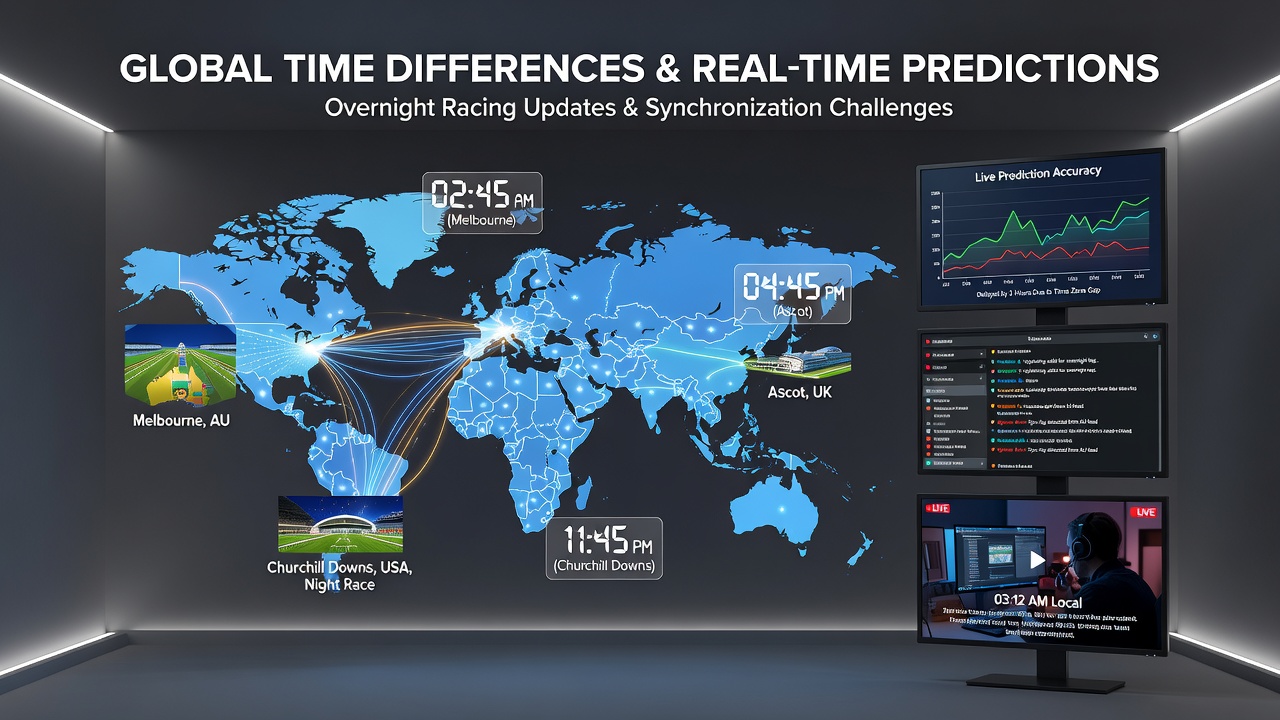
Predictors address these overlaps by layering time-stamped alerts that flag when an Australian race result crosses into European morning hours, yet the same systems must then pivot to tennis coverage where matches in the WTA 125 series might conclude just as North American bettors wake, creating a continuous cycle that demands both human oversight and algorithmic checks to avoid stale information reaching users.
Platform Strategies for Managing Global Delays
Many tipster services now employ distributed computing networks that pull live data from multiple sources simultaneously, which allows them to reconcile discrepancies caused by satellite uplinks in remote racing venues or mobile network congestion during tennis events in Southeast Asia; observers note that these setups reduce average update lag from 45 seconds to under 10 seconds across tested scenarios.
Industry reports from the European Gaming and Betting Association highlight how predictors incorporate machine learning models trained on historical time zone data to predict when certain events will experience higher latency, enabling preemptive cache updates that keep overnight racing results and early tennis scores aligned for international audiences without requiring constant manual refreshes.
Conclusion
Global time differences continue to dictate the operational frameworks for predictors who cover overnight racing and early morning tennis, with platforms relying on UTC standardization, regional servers, and adaptive algorithms to deliver consistent real-time information despite the physical distances involved. Data from regulatory and academic sources across Australia, Canada, and Europe shows that these methods have stabilized update reliability even as event calendars grow more interconnected. Those who track these systems observe that ongoing refinements in latency management remain essential for maintaining accuracy across shifting schedules.