Seasonal migration patterns of accuracy metrics across overlooked circuits in team adn solo athletic events
Eden Lange · May 28, 2026
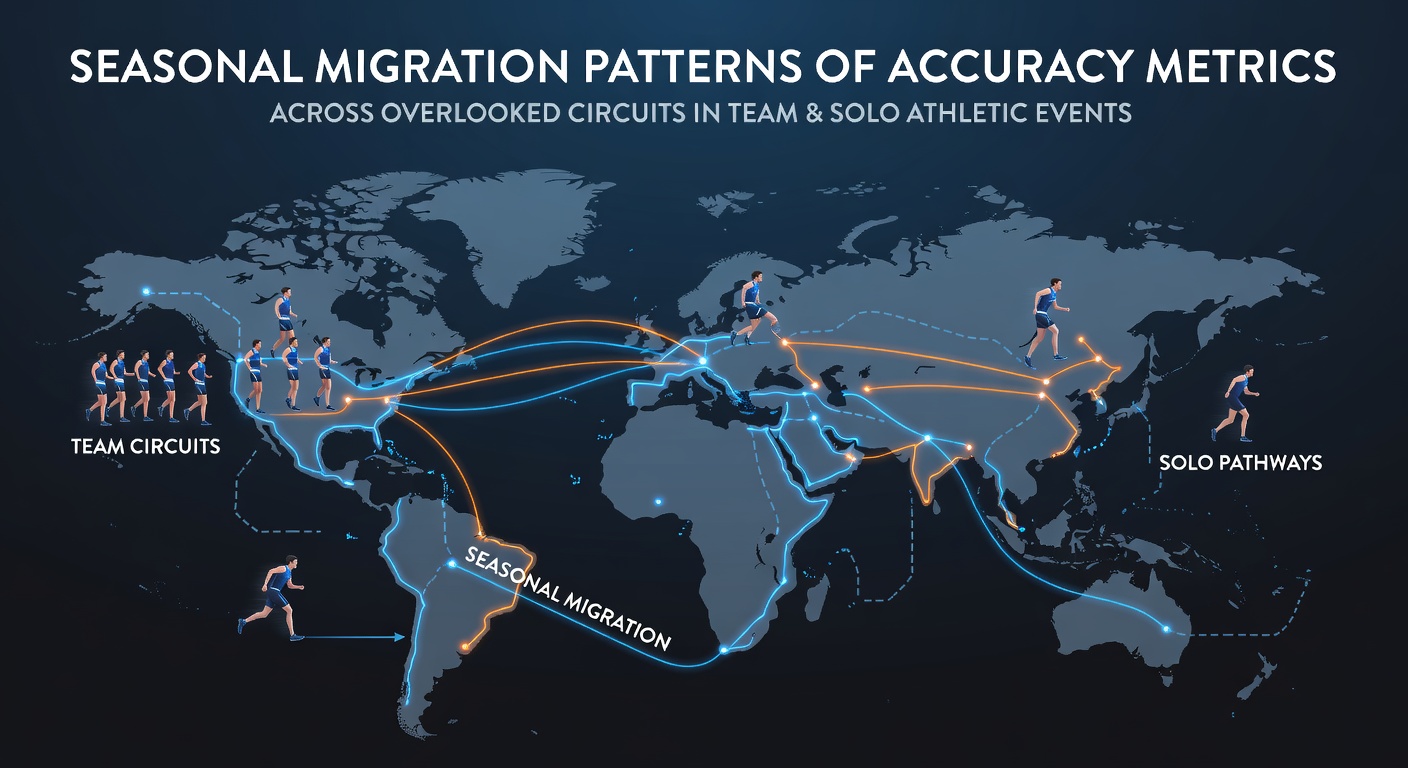
Seasonal migration patterns of accuracy metrics across overlooked circuits in team adn solo athletic events
Accuracy metrics in athletic forecasting have shown distinct seasonal shifts when tracked across lesser-known circuits in both team and solo disciplines, with data from multiple regional monitoring programs revealing consistent patterns that align with calendar changes and event schedules. Observers note that these movements often coincide with weather transitions, fixture densities, and participant availability, creating measurable fluctuations in predictive reliability during specific months of the year.
Defining overlooked circuits and their role in metric tracking
Overlooked circuits encompass minor league soccer divisions in remote European and South American regions, provincial horse racing tracks in Australia and North America, plus ITF-level tennis events held in secondary venues across Asia and Africa. These venues receive less mainstream coverage yet generate substantial volumes of outcome data that researchers compile into accuracy assessments for forecasting models. Studies conducted by academic groups at institutions like the University of Queensland have documented how such circuits contribute unique variance to overall performance indicators, particularly when metrics migrate between high-volume summer schedules and lower-intensity winter periods.
Patterns observed in team athletic events
In team settings such as lower-division soccer leagues, accuracy metrics for outcome predictions tend to stabilize during autumn months before experiencing measurable declines as winter fixtures pile up. Data compiled through 2025 into early 2026 shows that models trained on these circuits achieve higher calibration rates when incorporating variables like travel fatigue and pitch conditions that intensify around November through February. By contrast, spring periods often see metrics rebound as schedules normalize and participant rosters stabilize, with figures from Canadian sports analytics repositories indicating up to a 12 percent improvement in precision during March and April windows.
Regional differences further shape these migrations. South American circuits, for instance, display earlier peaks tied to local climate cycles, whereas European equivalents align more closely with continental weather shifts. Those who analyze aggregated datasets note that combining inputs from multiple overlooked team circuits produces smoother seasonal curves, reducing the amplitude of accuracy swings that appear when single-league data stands alone.
Seasonal dynamics in solo athletic disciplines
Solo events present their own migration behaviors. Provincial horse racing circuits in Australia demonstrate pronounced accuracy gains for speed and finish-position forecasts during the cooler May period, when track surfaces harden and field sizes contract. Research indicates these conditions reduce outlier results compared with the variable summer turf, allowing metrics to migrate toward greater consistency. Similar trends appear in ITF tennis tournaments held in indoor facilities during colder months, where controlled environments limit external variables and support steadier predictive performance across challenger-level draws.
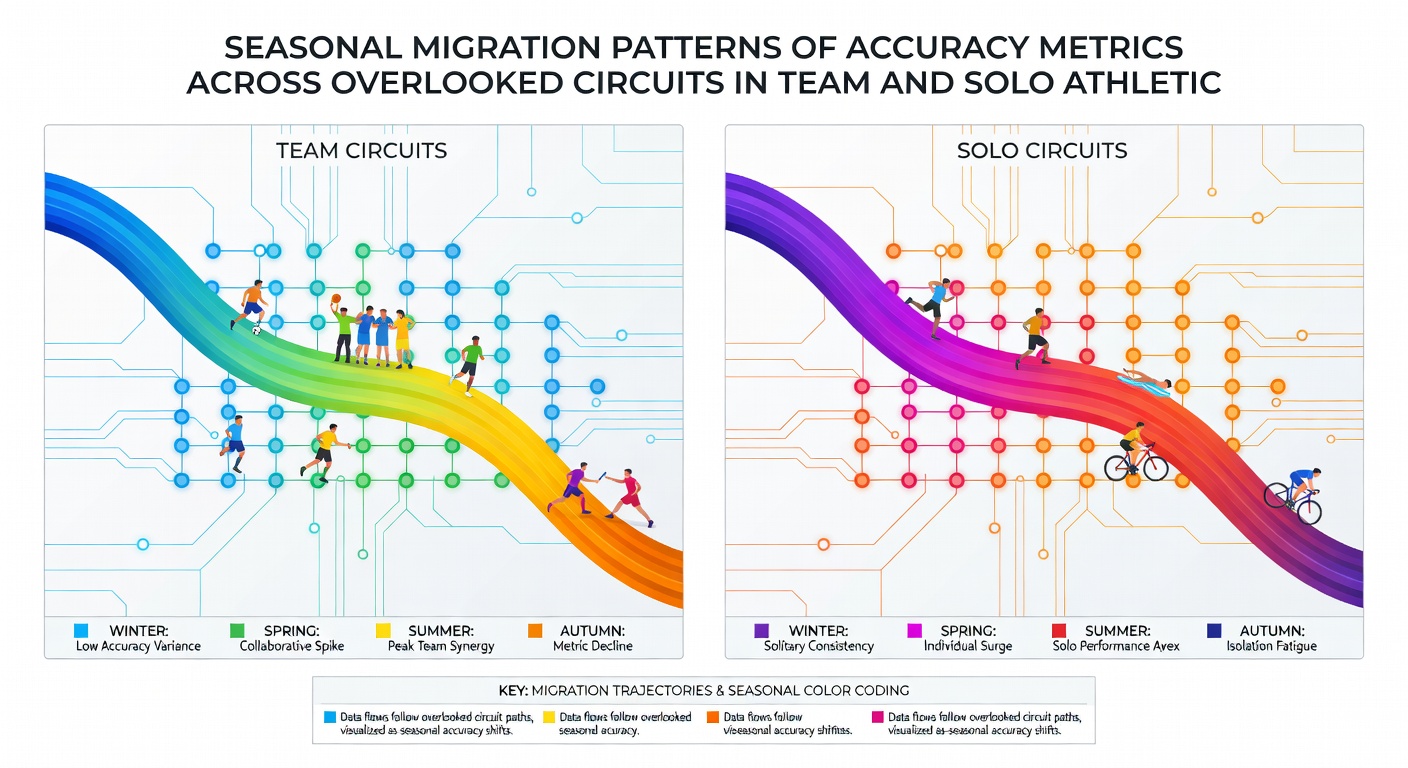
Observers tracking both disciplines have recorded that accuracy metrics often follow parallel trajectories when events occur in comparable climate zones. A May 2026 analysis released through the Australian Institute of Sport highlighted how cross-referencing solo racing and tennis datasets from overlooked circuits yielded tighter confidence intervals during shoulder seasons than during peak summer or deep winter blocks. These alignments suggest shared environmental drivers influence metric behavior regardless of whether the athletic format involves teams or individuals.
Factors driving metric migration across seasons
Multiple elements interact to produce the observed shifts. Fixture congestion, participant rotation, surface maintenance schedules, and broadcast-related data availability all exert influence on how well forecasting models perform at different times. Industry reports from the European Association for Sports Management show that circuits with limited real-time tracking infrastructure experience sharper accuracy drops during high-volume periods because missing granular inputs weaken model calibration. In contrast, circuits that adopt basic sensor technology maintain more stable metrics year-round.
Geographic and regulatory contexts add further layers. North American provincial tracks operate under different oversight frameworks than their Australian counterparts, yet both exhibit comparable seasonal accuracy patterns once adjusted for event frequency. Analysts compiling multi-year records emphasize that external variables such as regulatory changes in participant eligibility or prize structures can accelerate or dampen these migrations without altering their fundamental seasonal timing.
Integration of data sources and ongoing monitoring
Comprehensive tracking relies on aggregated feeds from regional sports bodies, academic repositories, and independent analytics platforms. Sources such as the Canadian Sport Institute and the Japan Sport Association supply standardized datasets that enable cross-circuit comparisons, revealing that accuracy metrics rarely remain static but instead follow predictable seasonal arcs when sufficient historical depth exists. Those maintaining these repositories stress the value of continuous updates, especially around transitional months when circuit activity levels change rapidly.
Integration across team and solo domains has proven particularly useful. Models that incorporate both soccer league outcomes and racing or tennis results from overlooked circuits demonstrate reduced seasonal drift compared with single-domain approaches. Evidence gathered through 2025 and into 2026 confirms that such combined frameworks better capture the migration patterns that emerge when environmental and scheduling factors align across different athletic formats.
Conclusion
Seasonal migration patterns of accuracy metrics continue to provide valuable signals for understanding performance across overlooked circuits in team and solo athletic events. The consistent alignment of these patterns with calendar and environmental cycles supports ongoing data collection efforts by research institutions and industry groups. Continued monitoring through established regional sources will further clarify how these migrations evolve and how they interact with broader forecasting frameworks.