Streaming Services Reshaping Real-Time Wagering Guidance for Major Sporting Events
Theo Long · Aug 17, 2026

Streaming Services Reshaping Real-Time Wagering Guidance for Major Sporting Events
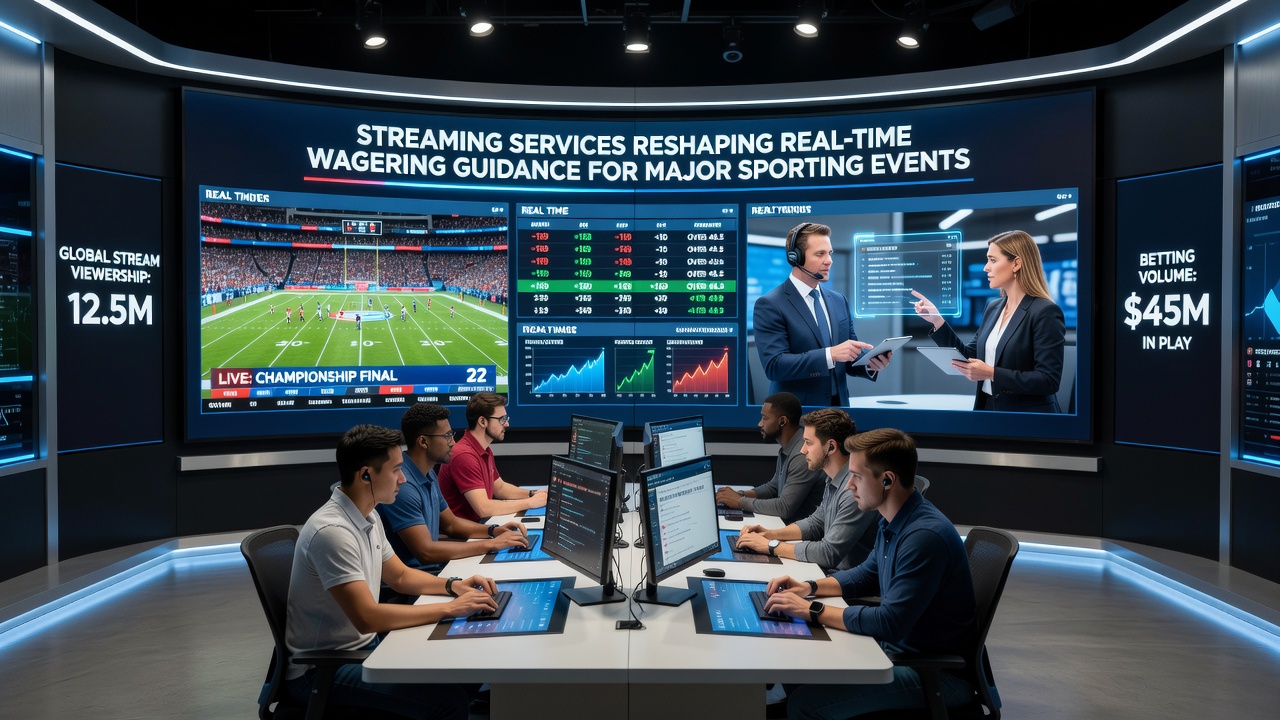
Streaming platforms now deliver layered data feeds that update odds and performance metrics within seconds of on-field action, and this integration has altered how guidance reaches bettors during high-profile contests across soccer, tennis, and horse racing. Broadcasters embed live analytics directly into video streams, allowing viewers to track possession percentages, serve speeds, and sectional times without switching applications, while third-party overlays supply probability models that adjust continuously as events unfold.
Live Data Integration in Major Events
During the 2026 summer schedule, networks covering international tennis tournaments and Premier League fixtures began routing synchronized statistics through their apps, and observers note that these streams now include probability shifts calculated from ball-tracking systems and pace sensors. Bettors receive alerts on momentum changes within the same interface that shows the match, which reduces the delay between an in-game development and a wagering decision. Industry reports from the Australian Communications and Media Authority indicate that viewership of integrated sports streams rose sharply through mid-2026, with peak audiences coinciding with live betting windows in marquee fixtures.
Technological Drivers Behind the Shift
Cloud-based rendering and edge computing enable the simultaneous transmission of video, telemetry, and updated market lines, whereas earlier broadcast models separated these elements across separate channels. Data centers positioned near stadiums compress sensor inputs from timing chips and player wearables into visual graphics that refresh multiple times per minute. Researchers at institutions tracking media consumption patterns have documented how these compressed pipelines cut the interval between a race split or a tennis point conclusion and the corresponding odds adjustment, often to under three seconds in major venues.
Regional Regulatory Context and Market Expansion
Agencies in North America and Europe have examined how streaming services package real-time information for wagering audiences, and figures from the Canadian Gaming Association show increased licensing applications for platforms that combine video with dynamic odds during 2026. These frameworks require clear separation between entertainment content and betting prompts, yet they permit statistical overlays that inform decision-making without direct transaction processing. One analysis released by the University of Nevada, Las Vegas examined viewership logs from major racing festivals and found that concurrent streaming sessions correlated with higher volumes of in-play wagers placed through authorized channels.
Platforms serving tennis draws have introduced shot-by-shot probability meters that update after every point, and similar tools appear in soccer broadcasts where expected goal metrics recalculate after each sequence. Horse racing streams incorporate stride analysis and sectional timing that adjust place and win markets on the fly, creating a unified viewing and guidance environment for users who remain within a single application throughout an event.
Impact on Guidance Providers and Bettor Behavior
Tipster services and data aggregators now align their outputs with the timing of these streams rather than relying on delayed television commentary, and this synchronization allows them to issue guidance that reflects the most recent telemetry. Observers tracking subscription patterns report that users increasingly favor platforms offering both video and contextual metrics, because the combined feed supports faster evaluation of live markets. In August 2026, several major soccer and tennis events demonstrated how a single streaming session could deliver updated win probabilities alongside video, prompting guidance providers to time their releases to coincide with these visual updates.
Transmission protocols continue to evolve, with 5G networks and improved compression standards reducing latency further in outdoor venues. This infrastructure supports higher-resolution graphics that display historical comparison data next to current performance indicators, giving viewers immediate context for any shift in odds. Regulatory bodies outside the UK have issued guidelines requiring transparent labeling of automated analytics so audiences understand the origin of each metric displayed during live coverage.
Conclusion
Streaming services have embedded real-time analytics into live sports coverage, and this development has compressed the cycle between on-field events and updated wagering guidance across soccer, tennis, and racing disciplines. Data from multiple regulatory and academic sources confirms expanded adoption of integrated streams through 2026, while technical advances in data delivery continue to shorten the interval between action and market response. These changes remain subject to ongoing oversight as platforms refine how statistical information appears alongside video feeds during major sporting calendars.